How to Handle the Holidays When You’re Struggling with an Eating Disorder
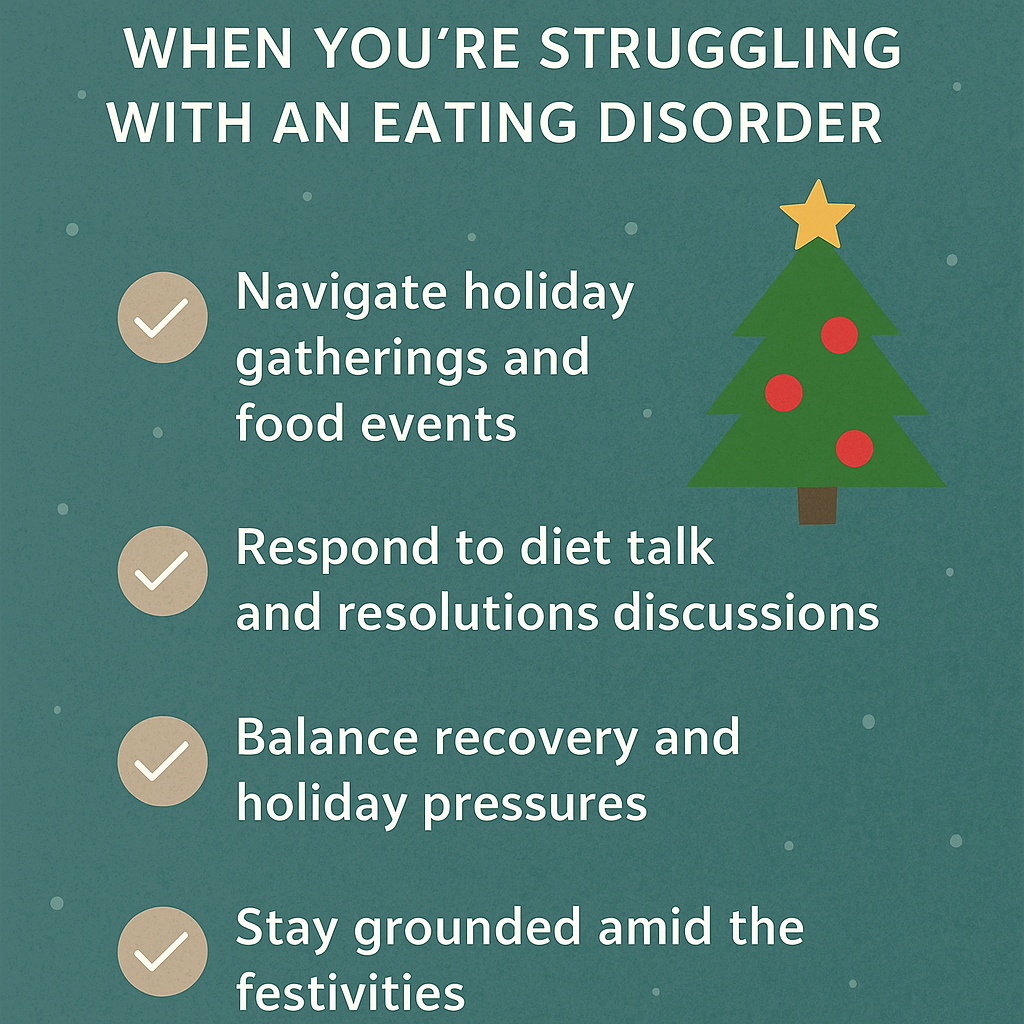
Holiday graphic with a Christmas tree and checklist offering tips for coping with an eating disorder: navigate gatherings, respond to diet talk, balance recovery, and stay grounded.
The holiday season is often painted as a time of joy, family gatherings, and festive meals. But if you’re living with an eating disorder, the holidays can feel overwhelming.
From food-centered parties to constant “diet talk,” December can bring a unique set of challenges that make recovery feel even harder.
If you’ve been searching for holiday eating disorder support, you’re not alone. With the right tools, you can make it through this season while protecting your peace and staying connected to your recovery.
Why the Holidays Can Feel Especially Hard
The holiday season can amplify the very struggles that come with eating disorders:
Food-centric gatherings – office parties, family dinners, buffets, and cookie swaps can make it feel like every event revolves around eating.
Diet and body talk – “I shouldn’t eat this,” “I’ll burn it off tomorrow,” or “My New Year’s resolution is to finally lose weight” are common refrains that can be triggering.
Pressure to indulge or restrict – holidays are often framed as a time to overeat now and “make up for it” later, reinforcing cycles of guilt and shame.
Loss of routine – disrupted schedules, travel, and stress can make it harder to keep up with supportive daily habits.
Acknowledging these challenges is the first step toward finding healthier ways to cope.
Coping Strategies for Food-Centered Gatherings
Holiday meals and parties don’t have to derail your recovery. Here are a few ways to approach them with more confidence:
Plan ahead with your therapist or support team. Think through what the day will look like, including meals and snacks before the event. Going in nourished can help reduce overwhelm and prevent urges to binge.
Give yourself permission to participate. Eating disorder recovery is about learning to be part of life again. If you feel able, allow yourself to join the meal without judgment.
Step away if needed. If the environment feels too loud, too food-focused, or too triggering, take a short break to regroup.
Handling Diet Talk and “New Year’s Resolutions”
Few things can take the joy out of the holidays faster than hearing endless comments about food, weight, or resolutions to “fix” one’s body in the new year.
Try these approaches:
Set boundaries kindly but firmly. A simple, “I’d rather not talk about diets right now” can redirect the conversation.
Change the subject. Ask about travel plans, favorite holiday traditions, or something positive that has nothing to do with food or bodies.
Lean on support. Text a friend, step outside for a breather, or remind yourself that other people’s choices don’t have to dictate your own.
Finding Balance During the Holidays
Recovery doesn’t mean the holidays have to be perfect—it means learning to navigate them with flexibility.
Consistency helps. Sticking with your normal meals and snacks as much as possible can keep you grounded.
Focus on connection, not consumption. Try leaning into meaningful parts of the season—family games, gift-giving, music, or faith traditions.
Allow room for imperfection. One challenging moment doesn’t erase your progress. Every holiday is a chance to practice coping in new ways.
Tips for Staying Grounded in Holiday Chaos
Use grounding techniques. Deep breathing, stepping outside, or even holding something tactile (like a stress ball or piece of jewelry) can bring you back to the present.
Create a calm exit plan. Knowing you can leave early or take a break if needed can help reduce anxiety.
Schedule extra support. Many clients find it helpful to book an additional therapy session during this season to prepare or debrief.
You Don’t Have to Do This Alone
If the holidays bring up anxiety, stress, or setbacks in your recovery, support is available. Working with a therapist can help you create a plan, manage holiday triggers, and find more peace around food and family gatherings.
At State of Balance Mental Health, I offer virtual therapy for Anorexia, Bulimia, Binge Eating Disorder, body image struggles and trauma across Long Island, New York and Florida to find peace with food, heal their relationship with their body, and feel more in control of their life.
Call me today or send me an email to schedule your free consultation to get the support you need this holiday season and beyond.
Final Thought
The holidays can be tough, but they don’t have to control your recovery. Whether you’re setting boundaries, creating a plan with your therapist, or simply showing up as you are, you’re already taking important steps toward healing. This season, give yourself the gift of grace.
Want more support?
Check out our Coffee and Counseling Podcast session on YouTube, Apple Podcasts or Spotify!
Coming Soon on the Blog
For many, the holidays aren’t just stressful—they can also stir up old wounds, grief, and complicated family dynamics. My next post will explore how trauma and stress can resurface during the holiday season and share practical ways to set boundaries, cope with triggers, and find small moments of peace.
*Disclaimer* - I am not a medical doctor and this post does not constitute as medical advice. This post is derived from my experience working with clients, research and collaborating with medical professionals.