When the Holidays Feel Heavy: Coping with Stress, Grief, and Family Triggers
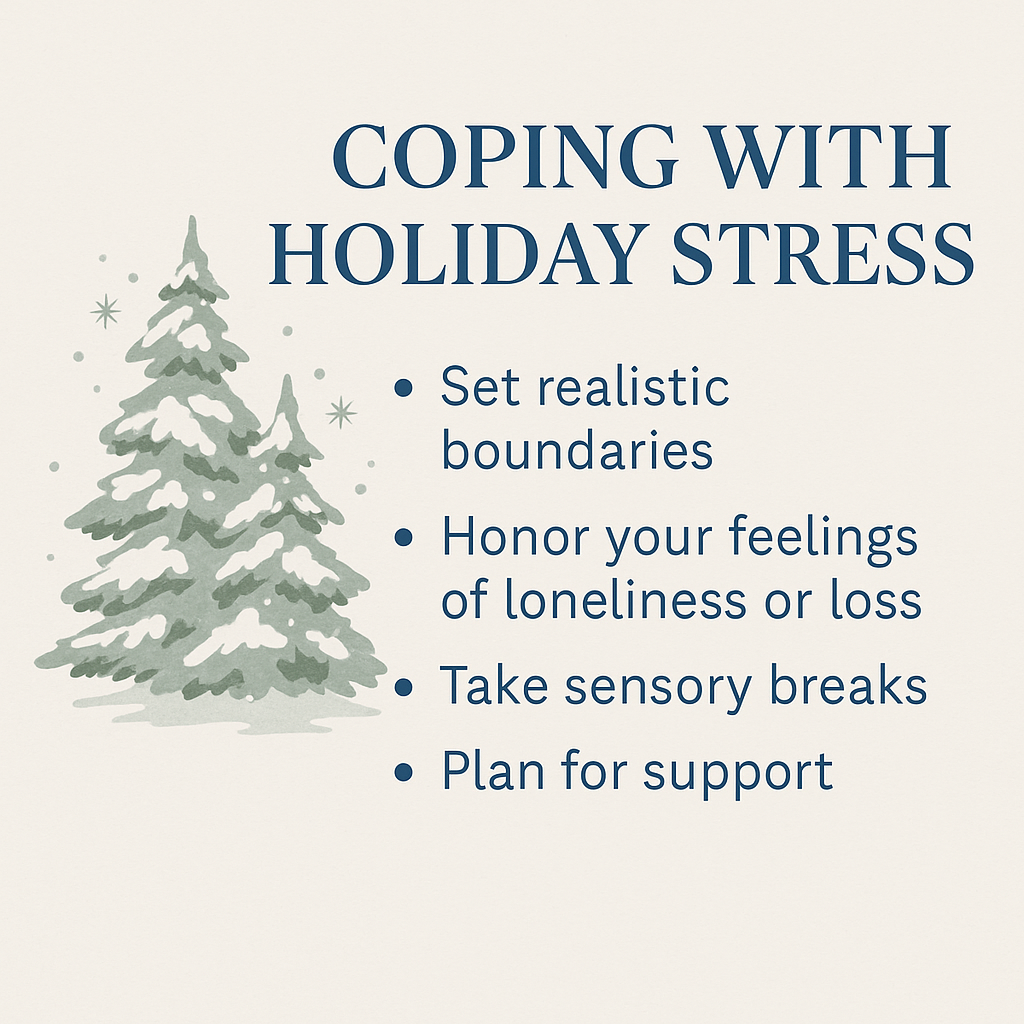
Winter-themed graphic with snow-covered trees and tips for coping with holiday stress: set boundaries, honor feelings of loss, take sensory breaks, and plan for support.
The holidays are often described as “the most wonderful time of the year.” But for many, they can feel anything but joyful.
If you’ve experienced trauma, loss, or complicated family relationships, this season may bring up more anxiety and sadness than excitement.
Between expectations of togetherness, financial stress, and constant reminders of what’s missing, it’s no wonder so many people feel overwhelmed. The good news? You can approach the holidays with intention, gentleness, and boundaries that protect your peace.
If you’ve been searching for holiday stress and trauma support, or wondering how to cope with triggers that resurface this time of year, this guide will help you find steadier ground.
Why the Holidays Can Resurface Trauma or Grief
The holidays have a way of amplifying emotions—especially the ones we try hardest to keep quiet. You may notice old memories or sensations resurfacing, or feel unexpectedly sad, anxious, or detached.
Here are a few reasons why that happens:
Familiar environments can activate memories. Returning to places or people tied to painful experiences can bring up trauma responses without warning.
Pressure to feel happy. When the world expects you to be festive, it can make any sadness or grief feel even heavier.
Reminders of loss. Empty chairs, changed traditions, or family tension can make grief feel fresh again, even years later.
Recognizing these patterns isn’t a sign of weakness—it’s a sign of awareness. And awareness is the first step toward healing.
Setting Boundaries to Protect Your Peace
Boundaries aren’t about shutting people out; they’re about protecting your wellbeing. The holidays are full of opportunities to say yes when your heart says no, but giving yourself permission to set limits can change everything.
Here are a few boundary ideas to consider:
Decide what’s realistic. It’s okay to skip a gathering, leave early, or suggest a shorter visit.
Prepare gentle scripts. Try: “Thanks for inviting me—I’m not up for that this year,” or “I’d love to celebrate another time in a quieter setting.”
Limit emotional exposure. You can choose who you spend time with, how long you stay, and what topics you engage in.
Boundaries create room for genuine connection instead of resentment or burnout.
Coping with Loneliness, Loss, or Family Dynamics
Sometimes, even when surrounded by people, the holidays can feel lonely. If you’re missing someone, grieving, or struggling with family tension, it’s okay to name that. You don’t have to pretend everything’s fine.
Try these gentle approaches:
Honor what’s missing. Light a candle, play a song, or start a small ritual in memory of loved ones.
Redefine what connection looks like. Maybe connection this year means spending time with friends, your faith community, or chosen family.
Practice self-compassion. If you need quiet time or can’t match others’ energy, that’s not avoidance—it’s self-care.
Healing often looks like choosing peace, not perfection.
Simple Ways to Stay Grounded
The holidays tend to move fast. Slowing down, even in small moments, helps you stay connected to yourself.
Take sensory breaks. Step outside for fresh air, light a calming candle, or listen to music that soothes you.
Regulate your body. Stretch, move, breathe deeply—whatever helps release tension.
Plan for support. Scheduling an extra therapy session or check-in can make the season feel more manageable.
Remember: grounding isn’t about erasing your emotions; it’s about giving them a safe place to land.
You Don’t Have to Go Through the Holidays Alone
If this season feels heavy, you’re not broken—and you don’t have to face it alone. Therapy can help you unpack what’s coming up, find steadier coping tools, and approach the holidays with more calm and clarity.
At State of Balance Mental Health, I offer virtual therapy for Anorexia, Bulimia, Binge Eating Disorder, body image struggles and trauma across Long Island, New York and Florida to people who are ready to heal from trauma, navigate life’s stressors, and feel more grounded in who they are.
Call me today or send me an email to schedule your free consultation to get the support you need this season and beyond.
Closing Thought
You don’t owe the holidays a performance. You don’t have to show up perfectly, or keep every tradition alive. This year, focus on protecting your peace, honoring what you feel, and taking the steps that support your healing. That’s more than enough.
If food-centered gatherings are also a source of stress, you may find my post on coping with eating disorders during the holidays helpful.
Want more support?
Check out our Coffee and Counseling Podcast session on YouTube, Apple Podcasts or Spotify!
Coming Soon on the Blog
If you’re already feeling the pressure of New Year’s weight-loss culture, you’re not alone. In my next blog post, we’ll dive into why your desire for change is valid — but the dieting mindset you’ve been handed is the real issue. You’ll learn what actually leads to sustainable confidence and how to set goals that support healing instead of shame.
This post will also introduce the relaunch of my Finally Body Confident course with special New Year pricing available for a limited time. Stay tuned — this is the kind of reset you actually need heading into the new year.
*Disclaimer* - I am not a medical doctor and this post does not constitute as medical advice. This post is derived from my experience working with clients, research and collaborating with medical professionals.